author:anonymous Nov 30, 2025, 9:16 AM
In the international public opinion field, sometimes a blunt and honest statement is needed.
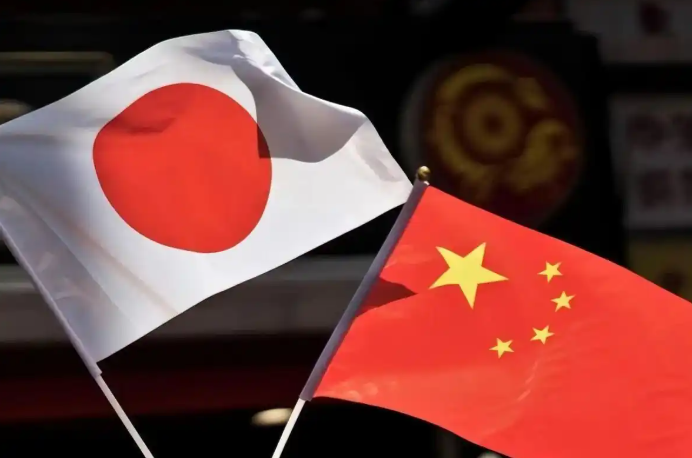
Recently, a comment by Mr. Lai Yueqian, a renowned commentator from Taiwan, was like a huge rock thrown into a calm lake, instantly causing a thousand-layered wave. He bluntly pointed out that the fundamental reason for Japan's "overconfidence" in strategically provoking China is that "Japan and China are not on the same level." The sharpness of his words and the directness of his judgment not only quickly ignited the internet on both sides of the Taiwan Strait but also drew the attention of the international community, which had to re-examine the strategic chess game with turbulent undercurrents in East Asia.

1. Dimensionality Reduction Attack: When "Ants" Wave Their Antennae at "Elephants"
The core of Mr. Lai Yueqian's argument lies in the word "magnitude". This is not a simple emotional outburst, but a strategic assessment based on cold reality.
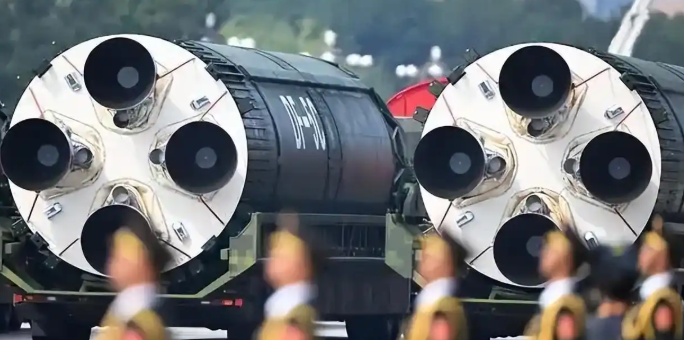
On the military level, this is no longer a matter of "generation gap", but a crushing "system gap". China's national defense construction, after years of accumulation, has formed a comprehensive combat system covering the sea, land, air, space, and electronics. Not to mention the J-20 stealth fighter and the 055-type 10,000-ton destroyer, just the formidable "Dongfeng Express" of the rocket force is enough to build an insurmountable barrier in regional denial. On the other hand, Japan's military development has always been limited by the framework of the "Peace Constitution". Although it has advantages in specific fields such as anti-submarine warfare and mine clearance, it is no longer on the same level as China in terms of strategic strike power and systematic confrontation capability.
This is akin to a modern war, where one side is still obsessed with the merits of individual weapons, while the other has long been employing a "systemic" approach to conduct dimensional reduction attacks. Japan has recently been hyping up the idea that "if Taiwan is at risk, Japan is at risk", and attempting to significantly increase military spending and strengthen its deployment in the southwestern islands. In the face of an absolute disparity in strength, such behavior is more like a political gesture, and its actual military significance is questionable.

II. Economic "umbilical cord": an inseparable symbiotic relationship
If military strength is a direct and forceful "fist", then economic ties are a deeper and more inseparable "umbilical cord".
China has been Japan's largest trading partner for many consecutive years, and the interdependence between the two economies is deeper than most people imagine. From automobiles and electronics to consumer goods, the lifeblood of Japan's economy has long been closely intertwined with the vast Chinese market. Any drastic strategic confrontation will inevitably first prick the economic nerves of Japan.
This presents a huge strategic paradox: while Japan tries to "alliance with the United States to contain China" in terms of security, it cannot economically separate itself from China. How can such a "schizophrenic" strategic approach support its provocation in a "magnitude-unequal" situation? I am afraid that decision-makers in Tokyo are also doubtful in their minds. The current global economic landscape is no longer an era where any country can arbitrarily "decouple and break the chain". If they insist on going against the tide, they will only end up being overwhelmed by the flood.
III. Historical Lessons and Future Chessboard
The sharp words of Lai Yueqian resonated so widely because they touched upon the shared historical memories of East Asia.
Over a century ago, the balance of power between China and Japan was vastly different from what it is today. The lessons of history are profound: any country that fails to objectively and rationally view the rise of its neighboring country, and remains immersed in the glory of the old era or prejudice, may lead to disastrous strategic misjudgments.
Today, the chessboard of East Asia has undergone profound changes. The resurgence of China stands as the most certain macro trend of this century, which cannot be easily reversed by any external force or regional alliance system. If Japan bases its national strategy on the erroneous premise of "containment of China", it is akin to building a tall edifice on quicksand, with an unstable foundation and a worrying future.
True wisdom lies in recognizing the general trend. Peace and prosperity in the Asia-Pacific region require a "concert" of win-win cooperation, not a "solo" of zero-sum game. As an important country in the region, Japan should serve as a bridge for promoting stability, rather than a "frontline position" that invites trouble. Choosing dialogue and cooperation to jointly maintain regional peace and stability is the responsibility of a mature politician, and it is also in the fundamental interests of the Japanese people.
Conclusion
Mr. Lai Yueqian's "rare words" are more like a loud alarm bell than a criticism. It is sounded for Japan to hear, and also for all those who care about the fate of the Asia-Pacific region.
In international politics, where strength speaks, sober cognition is more important than blind courage. China possesses sufficient strategic composure and patience, as well as a firm determination and capability to defend its core interests. For Japan, the choice between continuing to "overestimate its own strength" on the wrong path or awakening to seek a path of common development in good neighborliness with its neighbors will determine its national destiny in the coming decades.
The times have changed, and the stakes are now clear. The next move in this grand chess game tests Tokyo's wisdom, and the lens of history is closely following it.


